
A Practical Guide to Business Central Migration
When to migrate to Business Central, what a migration involves, the phases, and the pitfalls to avoid — a practical first-hand guide.
A Business Central migration is one of those projects that looks simple on a slide and gets complicated the moment you open your actual data. Having moved dozens of UK finance teams onto Microsoft Dynamics 365 Business Central — from QuickBooks, Sage 50, Sage 200 and older Dynamics NAV systems — we've learned that the difference between a smooth go-live and a painful one is almost never the software. It's the preparation. This guide walks through what a Business Central migration really involves, in the order you'll actually meet it, so you can plan yours with your eyes open.
When is it time to migrate?
Most businesses don't move to Business Central because they want new software — they move because their current system has quietly become the bottleneck. The usual signals:
- Month-end takes days, not hours, because numbers live in spreadsheets bolted onto the accounts package.
- You've outgrown the user or transaction limits of an entry-level system like QuickBooks or Sage 50.
- You can't see across the business — stock, projects, and finance don't talk to each other.
- You're on unsupported NAV and Microsoft's mainstream support has ended.
If two or more of those sound familiar, a migration is worth costing properly rather than patching around for another year.
What a Business Central migration actually involves
A migration is really four projects running in parallel. Underestimating any one of them is where timelines slip.
1. Data
This is the heart of it. You'll migrate master data (customers, suppliers, items, the chart of accounts, fixed assets) and a chosen amount of transactional history. Our strong advice: migrate open items and balances, not ten years of history. Bring across open invoices, open POs, item balances and opening trial balance figures. Keep the old system read-only for historical lookups. It cuts risk, cost and reconciliation pain dramatically.
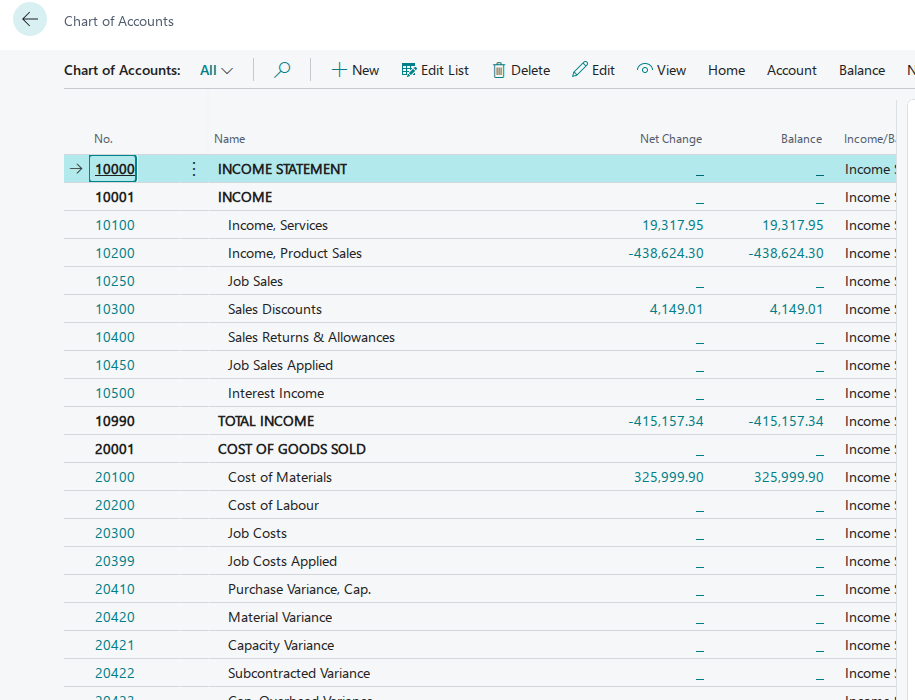
Data is also where you fix the mess you've been living with — duplicate suppliers, inconsistent item codes, a chart of accounts that grew by accident. Business Central migration is the best cleanup opportunity you'll get for a decade; use it.
2. Configuration
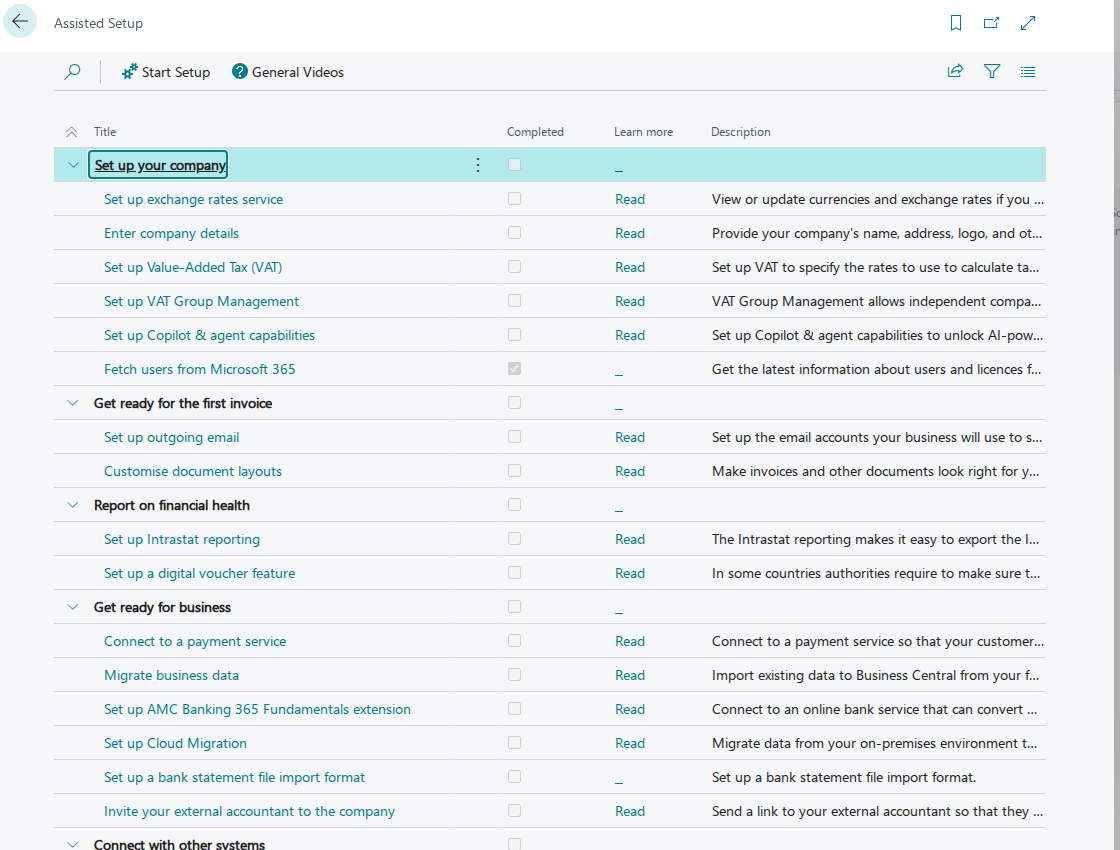
Business Central is genuinely powerful, which means it needs deciding, not just installing. Number series, posting groups, dimensions (the reporting backbone that replaces a sprawling chart of accounts), VAT posting setup for Making Tax Digital, approval workflows, and user permissions all have to be designed around how you actually work.
3. Extensions and integrations
Almost no one runs Business Central completely vanilla. You'll likely need per-industry functionality, reporting tools such as Jet Reports or Power BI, and connections to the systems around it — a payroll package, an e-commerce platform, a CRM, or bank feeds. Each integration is a mini-project with its own testing. Map these early; they're the most common cause of a delayed go-live.
4. People
The system your team logs into on Monday morning has to feel learnable. Role-tailored training, a short cutover playbook, and a named person to answer "how do I…?" questions in the first fortnight will do more for adoption than any amount of documentation.
The phases of a migration
A well-run Business Central migration follows a predictable rhythm:
- Discovery — map your processes, data and integrations, and agree scope.
- Design & configure — build the environment to match how you work.
- Data migration & test — load data into a sandbox and reconcile it against the old system, penny for penny.
- User acceptance testing (UAT) — your team runs real transactions end to end and signs them off.
- Cutover & go-live — a final data load, a clean switch-over date (usually a period end), and hands-on support.
- Hypercare — a support window after go-live to catch the inevitable edge cases quickly.
Common pitfalls (and how to avoid them)
- Migrating too much history. It multiplies reconciliation work and rarely gets used. Take balances, archive the rest.
- Treating it as an IT project. Finance and operations own the outcome; keep them in the driving seat.
- Skipping proper UAT. "It looked fine in the demo" is not the same as your team processing a real payment run.
- Going live mid-period. Cut over at a period or year end so your opening figures are clean.
- Leaving integrations to the end. They're the long pole in the tent — start them in week one.
How long does it take, and what does it cost?
For a typical UK SME moving from Sage or QuickBooks, expect 8–16 weeks from kick-off to go-live, depending on the number of integrations and how clean your data is. Cost is driven far more by complexity — how many bespoke processes, integrations and reports you need — than by the number of users. The single biggest lever on both is the quality of your data going in, which is entirely within your control before the project even starts.
Frequently asked questions
Can I migrate from Sage or QuickBooks directly? Yes. Both are common starting points. There's no one-click button, but the master data and open balances migrate cleanly with a proper mapping exercise.
Will I lose my historical data? No — you keep your old system available read-only for historical reference. You simply don't clutter the new one with a decade of closed transactions.
Do we need to migrate everything at once? Finance and core operations usually go live together on a clean cutover date. Peripheral integrations can follow in a planned second wave if needed.
Getting your migration right
A Business Central migration rewards preparation and punishes shortcuts. Get your data clean, design your configuration around your real processes, start integrations early, and protect proper UAT time — and go-live becomes a non-event rather than a crisis.
If you'd like a second pair of eyes on your plan, talk to our Business Central team — we'll tell you honestly what's straightforward and what to watch out for. You can also read our guide to moving from Sage to Business Central if that's your starting point.